Ethics Dialogue: Navigating the boundaries of Informed Consent and AI in research
In the rapidly evolving landscape of scientific research, informed consent and artificial intelligence (AI) present complex ethical challenges. This session will feature a dialogue between two experts who will present their views on the current approach to data privacy, consent, and the role of AI in research. The discussion will encourage open, critical, and engaging conversation with the participants to critically examine the tension between research, innovation and ethics, offering a space for collaborative exploration of the dilemmas that face modern research. The session will be moderated by Jan Bjaalie.

Who You’ll Be Hearing From
This session brings together expert voices from across the EBRAINS community and beyond. Discover the people sharing their insights, research, and perspectives on the topic.
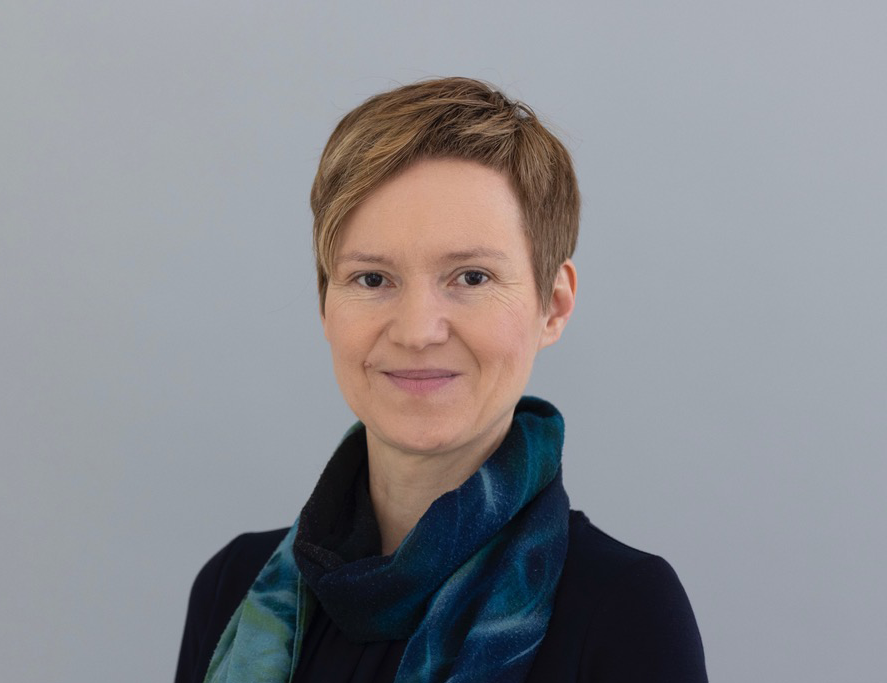
Susanne Schreiber studied biophysics at Humboldt University Berlin. Her first hands-on encounter with neuroscience research was during her Diploma thesis in the lab of Simon Laughlin at the University of Cambridge, UK. For the first half of her PhD, she joined the lab of Terry Sejnowski at the Salk Institute for Biological Studies in La Jolla, US, as a doctoral Sloan-Swartz Fellow. She completed the dissertation in Berlin in the lab of Andreas Herz. In 2008 Susanne received the Bernstein Award for Computational Neuroscience which allowed her to found her own computational neurophysiology lab at Humboldt-University Berlin, where she was tenured in 2015 and became Einstein professor in 2021. Her lab investigates principles of neural computation combining a biophysical and an evolutionary perspective. She is the Chair of the Bernstein Network for Computational Neuroscience in Germany (since 2019) and Vice Chair of the German Ethics Council (since 2020).

Hervé Chneiweiss is a neurologist and neuroscientist, MD-PhD, Emeritus Research Director (CNRS) at the Centre for Neuroscience Sorbonne University and neuro-oncologist at hosp. La Salpétrière (AP-HP). Trained as a neurologist (movement disorders, neurogenetics and then brain tumors), his scientific work was dedicated to the plasticity of astrocytes and for the last 20-y their roles in brain tumor origin, progression and treatment resistance, identifying new metabolic drivers and therapeutic avenues. He has authored more than 200 academic papers. He is also involved in bioethics, presently chair Inserm Ethics Committee, EMBL Ethics Board, EBRAINS Science and Society and ARRIGE, past-chair of UNESCO International Bioethics Committee, former member French National Ethics Committee (CCNE), WHO advisory committee on developing global standards for governance and oversight of human genome editing, expert for OECD for neurotechnology. He wrote several books or chapters on bioethics of human embryos, stem cells, genetics and neuroscience.
Find your way on the map