NeuroAI, circuits and cognition
The Virtual Brain (TVB) is the state-of-the art simulation environment for clinical applications, most prominently for epilepsy treatment. TVB connects thousands of biophysical nodes by a realistic connectome, with a single node modeling the dynamics of interacting neurons. Yet, to capture the phenomenology of other mental diseases, such as Parkinson disease or schizophrenia, behavioral and cognition needs to be included. Walter Senn presents a whole-brain model built on multi-head self- and cross-attention modules with recurrent memories. Cortical micro- and macro-columns are shown to capture the structure of key-value memories, queried by sensory or intracortical inputs. Hippocampal memories are involved in context switching, while basal ganglia provide a reward-based selection of values. Marmaduke Woodman presents a roadmap to include self-attention nodes into TVB and extend this to a simulation infrastructure for mental diseases. The audience is welcome to brainstorm such a roadmap.
17:15 – 17:40 Walter Senn, "Multi-head self-attention in cortical circuits"
17:40 – 18:05 Marmaduke Woodman, “Cognitive modelling in The Virtual Brain”
18:05 —18:15 Discussion: "How to extend TVB towards mental diseases?"

Who You’ll Be Hearing From
This session brings together expert voices from across the EBRAINS community and beyond. Discover the people sharing their insights, research, and perspectives on the topic.
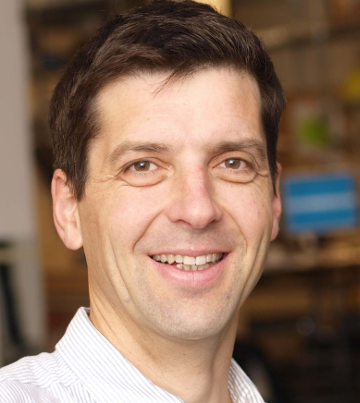
Prof. Dr. Walter Senn is a computational neuroscientist recognized for his models on cortical computation that connect biological and artificial intelligence. He has a PhD in Mathematics from University of Bern and Freiburg i.Br., and was for research stays at Moscow Lomonossov University (with Prof. Y. Sinai), at the NIH and NYU (with Prof. Rinzel) and at the Hebrew University in Jerusalem (with I. Segev). Since 2006 he is Full Professor for Computational Neuroscience at the Institute of Physiology, University of Bern, where he is Co-Director since 2010. His recent work is devoted to the neuronal least action principle from which dynamic laws of neuron and synaptic plasticity are derived in a similar way as the law of motion is derived from the least action principle in physics. The theory links cortical microcircuits with behavioral error minimization, links to artificial intelligence and serves as a basis to design neuromorphic hardware. W. Senn is involved in various international collaborations (such as EBRAINS 2.0).

Marmaduke Woodman is a research engineer at the Institute of Systems Neuroscience (INS) at Aix Marseille University, where he develops computational infrastructure for virtual brain twin modeling. His work focuses on bridging mechanistic whole-brain models with clinical applications through scalable inference methods and privacy-preserving architectures. He is a core developer of The Virtual Brain software and contributes to EU projects including EBRAINS 2.0 and Virtual Brain Twin, addressing challenges at the intersection of computational neuroscience, neuroinformatics, and data governance.
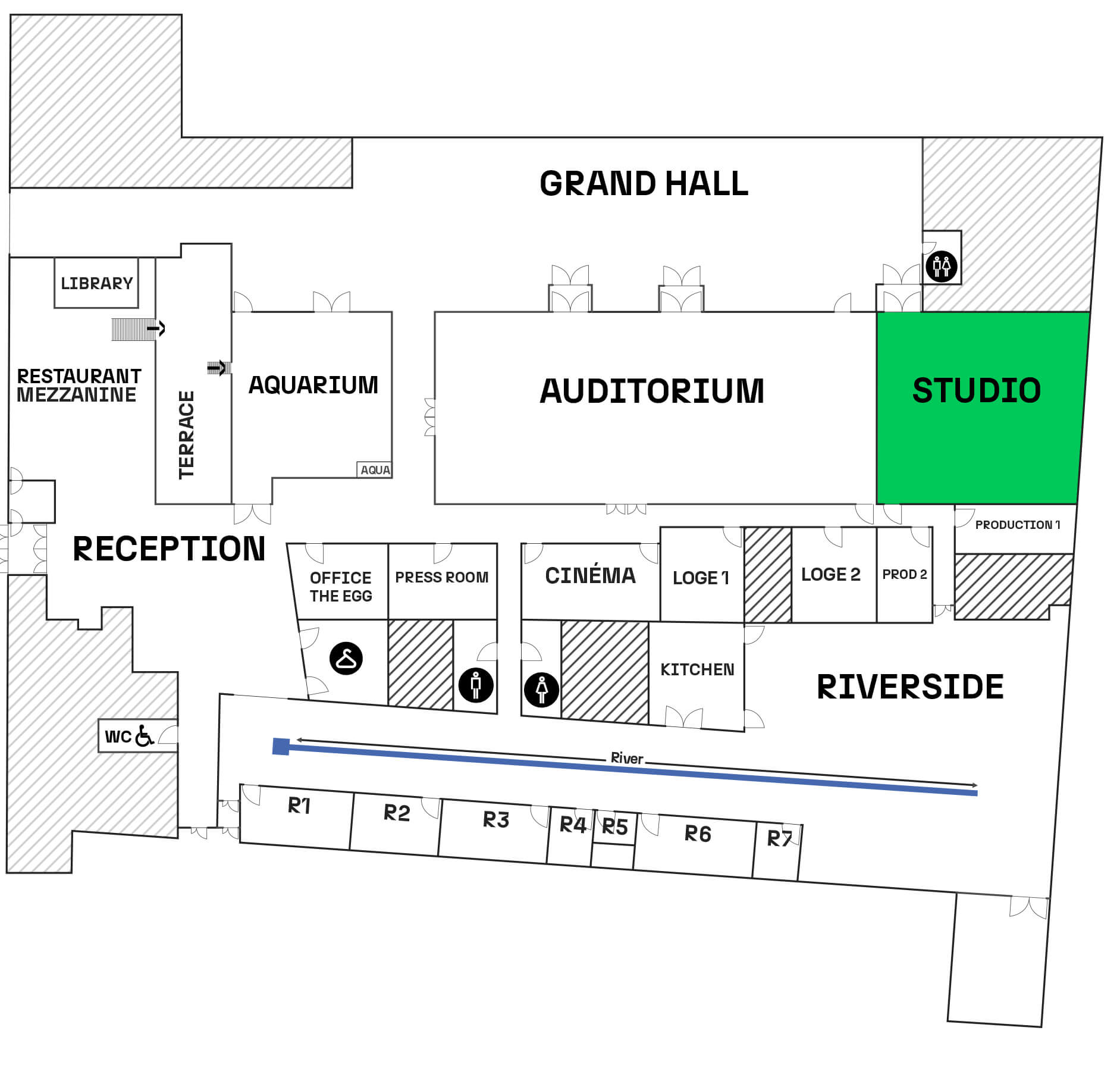
Find your way on the map